As fragrance houses race to improve performance without sacrificing aesthetics or sustainability, Givaudan is making a strategic bet on one of the industry's most promising delivery technologies. The company has announced an equity investment and strategic collaboration with Swiss startup Microcaps AG, giving the fragrance leader access to precision microencapsulation technology that could reshape everything from alcohol-free fine fragrance to advanced beauty applications.
At the center of the collaboration is Microcaps' patented microfluidic manufacturing platform, originally developed at ETH Zurich's Complex Materials Group. Unlike conventional encapsulation methods, the technology uses a step-emulsification process to produce highly uniform fragrance droplets at industrial scale, offering precision, reproducibility and formulation control. The company has secured 11 patents around the platform and recently commercialized Perfume Pearls, an alcohol-free fragrance delivery system designed specifically for fine fragrance.
 While encapsulation has long been associated with fabric care and controlled scent release, the partnership signals a growing shift toward applying the technology to prestige fragrance formats, where performance, sensory experience and formulation flexibility are becoming increasingly important differentiators.Givaudan
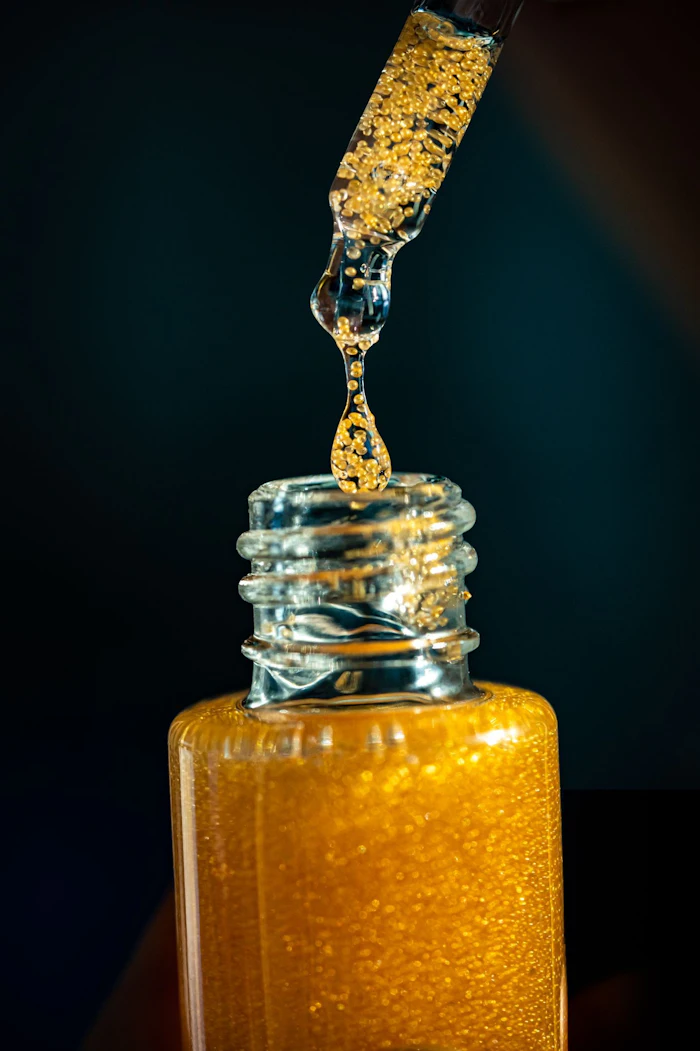
Rather than dissolving perfume oil in ethanol, Perfume Pearls encapsulate pure fragrance oil inside translucent alginate shells derived from algae. The suspended microcapsules remain stable in a structured water-based formula until sprayed, when the capsules burst within the nozzle to release fragrance alongside water.
The result is an alcohol-free fragrance that avoids the drying feel of ethanol while maintaining sprayability, fragrance intensity and a premium sensory experience without emulsifiers or traditional solubilizers.
At this early stage, the encapsulation technology is generally being applied to fragrances designed according to principles learned for alcohol-based perfumery, says Microcaps co-founder Michael Hagander.
In conventional perfumery, fragrances are balanced across top, middle and base notes according to the release profile of ethanol. This includes critical top notes that dominate upon the first spray and which shape initial consumer impressions.
Microcaps' technology offers a less intense impression upon the initial spray, though the difference in odor intensity evens out to the equivalency of an alcohol-based scent after 30 seconds, Hagander notes.
 Rather than dissolving perfume oil in ethanol, Perfume Pearls encapsulate pure fragrance oil inside translucent alginate shells derived from algae. The suspended microcapsules remain stable in a structured water-based formula until sprayed, when the capsules burst within the nozzle to release fragrance alongside water. Microcaps
He adds that scent compositions are generally more stable in Microcaps' chassis compared to ethanol, resulting in top notes that remain for a longer period of time.
The technology is quite young compared to the long legacy of alcohol-based perfumery, Hagander acknowledges, meaning it will take time for perfumers to adjust creative strategies around the release profile of the new encapsulation technology.
This will likely include scents with more intense head notes to match the initial sensory spike seen upon the first spray of an alcohol-based scent.
For Givaudan, the investment expands its toolbox at a time when consumer demand is pushing fragrance development beyond conventional alcoholic sprays. Water-based formats, skin-friendly formulations, natural positioning and improved sustainability credentials have become strategic priorities across prestige fragrance and beauty, but achieving comparable performance has remained a technical challenge.
Hagander points out that Microcaps' system is intended specifically to the skin, offering a much gentler alternative to alcohol. Furthermore, he says, skin care ingredients can be added to the system to evolve from simply "doing no harm" to actively moisturizing the skin.
On skin, Hagander says the format can leave the skin feeling "silky," transforming fragrance from a smell into a multidimensional experience.
Acknowledging that he's "obviously biased," Hagander believes that non-alcohol fragrances will be a significant category, but will not be replacing the ethanol-based category any time soon.
He also sees the sector first gaining traction with perfume's newest buyers—Gen Alpha and Gen Z—who tend to be health-conscious and perhaps don't have as deeply ingrained expectations of what a fragrance should be compared to older generations.
It's also a natural fit for markets where alcohol-based scents are not preferred. It makes sense, then, that Microcaps will be attending this year's BeautyWorld Middle East in October 2026.
An early adopter was Guerlain, whose Aqua Allegoria Perle (formulated by Guerlain perfumer Delphine Jelk) offered a reimagining of a trio of the brand's signature scents using the water-gel format.
While Hagander sees brands primarily applying the technology to flankers and niche launches for now, he expects brands to launch entire large-scale lines using Microcaps' system.
Beyond to the performance and experiential elements of Microcaps' technology, Hagander points out that, in the era of an ecommerce fragrance sales boom, water-based platforms are far less hazardous (and thus less expensive, generally) to ship compared to flammable alcohol-based products.
And, just as importantly, because the capsules break upon spraying and are entirely biodegradable and microplastic-free, they do not persist in any negative way in the environment.
(Hagander says the company is exploring certifications around the technology's sustainability.)
 Rather than dissolving perfume oil in ethanol, Perfume Pearls encapsulate pure fragrance oil inside translucent alginate shells derived from algae. The suspended microcapsules remain stable in a structured water-based formula until sprayed, when the capsules burst within the nozzle to release fragrance alongside water. Microcaps
"Encapsulation is one of the most transformative technologies in our field," said Jeremy Compton, global head of science and technology, fragrances, at Givaudan. He noted that combining Givaudan's fragrance expertise with Microcaps' platform creates new opportunities to improve both performance and sustainability across fragrance and skin care applications.
The collaboration will initially focus on strengthening Givaudan's encapsulation capabilities for its Fragrance & Beauty business, particularly in non-alcoholic fine fragrance performance, while opening opportunities across broader beauty and personal care categories.
Maurizio Volpi, president of Givaudan Fragrance & Beauty, called the partnership "a strategic step" that strengthens the company's innovation capabilities and ability to deliver differentiated fragrance experiences.
For Microcaps, the deal represents a significant commercialization milestone. Founded as an ETH Zurich spinout, the company has spent the past seven years developing industrial-scale microfluidic encapsulation technology serving cosmetics, nutraceuticals and life sciences. Its production platform operates from Switzerland using purpose-built manufacturing lines compliant with Cosmetic GMP 22716, with founders Alessandro Ofner, Ph.D., and Hagander positioning the technology as a new benchmark for high-precision encapsulation.
Beyond the immediate investment, the partnership highlights a broader competitive trend emerging among major fragrance suppliers. As fragrance performance becomes as important as fragrance composition itself, companies are increasingly investing in enabling technologies—including encapsulation, controlled-release systems and novel delivery platforms—to create differentiated consumer experiences rather than relying solely on new aroma ingredients.