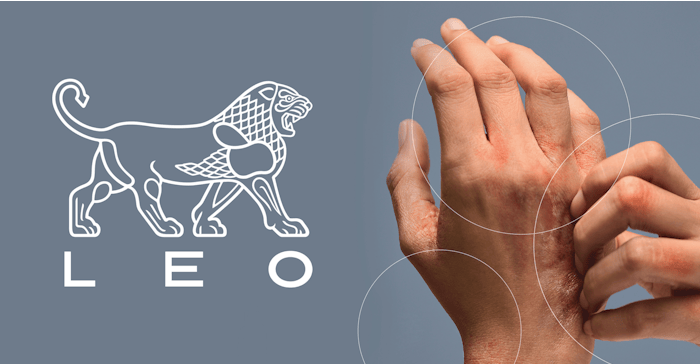
Chronic hand eczema (CHE) is a highly debilitating inflammatory skin disease1 that affects approximately one in ten adults worldwide,2,3 causing itchy, painful, blistered or swollen skin that can interfere with daily activities.1 CHE is defined as eczema on the hands lasting more than three months or recurring at least twice a year.4 CHE is especially common among beauty professionals whose work involves constant ‘wet work’ — frequent handwashing, exposure to water, and contact with irritants or allergens.4,5 This puts hairstylists and other beauty technicians at a higher risk of developing CHE4, despite the fact that their work is devoted to enhancing the well-being of others.
CHE is more than a skin disease — it can be a serious, often misunderstood condition.4,6,7 Symptoms include persistent itch and pain, redness, swelling, blistering, cracking, or thickened skin.8 For those whose careers depend on their hands, this disease can significantly impact quality of life.7,9
Why beauty professionals are more vulnerable to CHE
Beauty professionals face unique occupational exposures that make them particularly susceptible to developing CHE such as:
Environmental factors:
Repeated handwashing and contact with water occurs often in salons—whether shampooing clients, mixing hair color, or cleaning tools. Research has shown that frequent exposure to water and detergents, particularly ingredients like sodium lauryl sulfate (SLS), can strip away the skin’s natural protective barrier and trigger irritation that may progress to eczema.10 On top of water exposure, many salon staples—such as hair dyes, bleaching agents, and nail polish removers—contain well-known irritants and allergens.11 These substances have been strongly linked to occupational contact dermatitis, which makes the hands red, dry, and itchy.12
Health and Safety Measures:
Constant exposure to water and fluctuating temperatures (like blow dryers and steam treatments) can further weaken the skin barrier.13 Even protective measures can carry risks. Gloves, for example, are crucial for shielding the skin from chemicals. But when worn for long periods, they trap sweat and moisture against the skin, creating a damp environment that may aggravate irritation and lead to flare-ups of hand eczema.4,11
Biological factors:
Being female is associated with a higher risk of chronic hand eczema4, and since most beauty professionals are women (90.8%)14, this increases risk across the industry.
The impact of CHE goes beyond the skin
CHE can have an impact beyond discomfort — for beauty professionals, its symptoms can make daily tasks harder and even put careers at risk.8,15,16
- Quality of life: Chronic hand eczema can interfere with even the simplest daily activities, making work tasks frustrating and uncomfortable. Because symptoms are often visible, people may also feel embarrassed or self-conscious, which can take a toll on confidence.8,15,16 As a result of these feelings, relationships with clients and colleagues may be impacted.
- Mental health: In a 2025 Ipsos survey of patients’ perspective living with CHE:
- 53% say the emotional and social impact of CHE is just as bad as the physical pain. 17
- 56% of patients surveyed said keeping a positive attitude due to physical discomfort is a struggle.17
- 45% of patients surveyed said CHE impacts their ability to perform daily tasks and activities. 17
For beauty professionals, there’s the added stress of losing workdays or disappointing clients. Anxiety and depression rates are higher among people with skin diseases, underscoring the importance of early recognition and treatment.15
Understanding the seriousness of CHE
As Dr. Linda Stein Gold, MD of Henry Ford Hospital, emphasizes:
“Many patients don't realize they're living with chronic hand eczema, which is a clinically distinct disease from atopic dermatitis (eczema),” she said. “Recognizing this difference is crucial for seeking proper medical care. Patients shouldn't have to endure debilitating symptoms like persistent itch and pain that can impact their mental well-being and ability to work.”
This distinction is vital for beauty professionals. CHE is not just “dry skin” or a temporary irritation, it is a distinct medical condition that requires proper evaluation and treatment.
CHE prevention and self-care strategies
While CHE can be challenging, there are steps beauty professionals can take to protect their hands and reduce their risk:4
- Use gloves: Always wear protective gloves when working in wet conditions and handling hazardous substances. When gloves are worn for extended periods, ensure they are breathable and have cotton liners to help absorb sweat.
- Practice good hand hygiene: Avoid harsh or scented soaps in addition to excessively hot water when washing hands. Wash hands with lukewarm water.18
- Moisturize: Apply fragrance-free, barrier-repair creams multiple times a day, especially after hand washing and before bed. Barrier creams should be applied before work.
- Read the ingredients: Familiarize yourself with the most irritating and allergenic chemicals in your salon and take steps to minimize exposure. Use protective gloves that are resistant to chemicals when necessary.
- Give your skin a break: Whenever possible, schedule breaks to allow your hands to rest from constant exposure to moisture or chemicals. This will help prevent skin irritation caused by prolonged glove use or exposure to harsh substances.
- Talk to a doctor: If symptoms persist beyond a few weeks or recur, talk to a dermatologist to learn about treatments that can help.
Take action against CHE today
For beauty professionals, understanding the risks of chronic hand eczema is essential. Recognizing early symptoms, prioritizing prevention, and seeking timely medical advice can make the difference between thriving in your profession and facing long-term setbacks.
Staying educated is the first step toward CHE prevention, early diagnosis, and better outcomes. Learn the symptoms, know your risks, and talk to a doctor if you have persistent issues with the skin on your hands.
To learn more, visit https://www.talkche.com/
References
- Dubin C, Del Duca E, Guttman-Yassky E. Drugs for the Treatment of Chronic Hand Eczema: Successes and Key Challenges. Ther Clin Risk Manag. 2020;16:1319-1332. Erratum in: Ther Clin Risk Manag. 2021 Mar 18;17:233.
- Lee GR, Maarouf M, Hendricks AK, Lee DE, Shi VY. Current and emerging therapies for hand eczema. Dermatol Ther. 2019;32(3):e12840.
- Quaade AS, Simonsen AB, Halling A-S, Thyssen JP, Johansen JD. Prevalence, incidence, and severity of hand eczema in the general population – A systematic review and meta-analysis. Contact Dermatitis. 2021;84:361–374.
- Thyssen JP, Schuttelaar MLA, Alfonso JH, et al. Guidelines for diagnosis, prevention, and treatment of hand eczema. Contact Dermatitis. 2022;86(5):357-378.
- Weidinger S, et al. Hand eczema. Lancet. 2024;404(10470):2476-2486.
- Tauber M, et al. J Eur Acad Dermatol Venereol. 2024;38(6):997-998. doi:10.1111/jdv.20023
- Elsner P, Agner T. Hand eczema: treatment. J Eur Acad Dermatol Venereol. 2020;34 Suppl 1:13-21.
- Grant L, Seiding Larsen L, Burrows K, et al. Development of a Conceptual Model of Chronic Hand Eczema (CHE) Based on Qualitative Interviews with Patients and Expert Dermatologists. Adv Ther. 2020;37(2):692-706.
- Crépy M-N, Molin S, Giménez-Arnau AM, Apfelbacher C, Brignoli L, Morillo A, Venborg E, Norlin JM, Bewley A, Fargnoli MC. Exploring the relationship between chronic hand eczema, occupation, and household/leisure activities. Presented at: European Society of Contact Dermatitis (ESCD) Congress; September 4-7, 2024; Dresden, Germany. Poster 19.
- Dhruv D. The study of sodium lauryl sulfate (SLS) toxicity. J Clin Toxicol. 2023;13:542. doi:10.35248/2161-0495.23.13.542.
- Uter W, Johansen JD, Macan J, Symanzik C, John SM. Diagnostics and prevention of occupational allergy in hairdressers. Curr Allergy Asthma Rep. 2023;23(5):267–275. doi:10.1007/s11882-023-01076-z.
- Tiedemann D, Clausen ML, John SM, Angelova-Fischer I, Kezic S, Agner T. Effect of glove occlusion on the skin barrier. Contact Dermatitis. 2016 Jan;74(1):2-10. doi: 10.1111/cod.12470. Epub 2015 Sep 14. PMID: 26364588.
- Herrero-Fernandez M, Montero-Vilchez T, Diaz-Calvillo P, Romera-Vilchez M, Buendia-Eisman A, Arias-Santiago S. Impact of Water Exposure and Temperature Changes on Skin Barrier Function. Journal of Clinical Medicine. 2022; 11(2):298. https://doi.org/10.3390/jcm11020298
- DataUSA. Hairdressers, hairstylists & cosmetologists. DataUSA.io. 2023.
- Dalgard FJ, Gieler U, Tomas-Aragones L, et al. The psychological burden of skin diseases: a cross- sectional multicenter study among dermatological out-patients in 13 European countries. J Invest Dermatol. 2015;135(4):984-991.
- Elsner P, Agner T. Hand eczema: treatment. J Eur Acad Dermatol Venereol. 2020;34 Suppl 1:13-21.
- LEO Pharma Inc. Data on File.
- de León FJ, Berbegal L, Silvestre JF. Abordaje terapéutico en el eczema crónico de manos. Actas Dermosifiliogr. 2015;106:533544.
MAT-85491 November 2025
Disclaimer:
The above paid-for content was produced by and posted on behalf of the Sponsor. Content provided is generated solely by the Sponsor or its affiliates, and it is the Sponsor’s responsibility for the accuracy, completeness and validity of all information included. Beauty Launchpad takes steps to ensure that you will not confuse sponsored content with content produced by Beauty Launchpad and governed by its editorial policy.