The Society of Cosmetic Chemists' 79th Annual Meeting (SCC79), held Dec. 16 and 17, 2025, in NYC, delivered a wealth of knowledge and forward-thinking innovation, led by the Frontiers of Science keynote by bestselling author Sam Kean.
Conference sessions revealed advances such as AI, biomimetics and glypicans in follicles for hair and scalp health; Chinese biotech approaches to skin care (e.g., recombinant collagen, immune dysregulation, etc.); color theory, dark spot brightening and more for inclusive beauty; and emerging technologies in general, such as postbiotics, single-cell transcriptomics, small RNA-based actives, etc.
 The Technology Showcase provided exhibitors a platform to showcase their latest and greatest innovations.
In addition, the Technology Showcase provided exhibitors a platform to showcase their latest and greatest innovations, the president's awards luncheon celebrated industry leaders, while the closing cocktail reception provided a relaxed atmosphere for networking.
'The Disappearing Spoon' Frontiers of Science Keynote Address
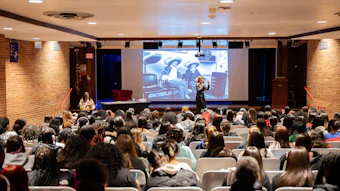
SCC79 Annual Meeting kicked off with an enlightening keynote address by Sam Kean, a New York Times best-selling author, who shared captivating stories from his book The Disappearing Spoon. His talk blended science, history and human curiosity, offering a deep dive into the Periodic Table and setting the tone for the day.
"The Periodic Table is one of our crowning scientific achievements, but it's also a treasure trove of passion, adventure, betrayal and obsession," Kean wrote, in the SCC79 speaker abstracts. His presentation was followed by book sales and signing.
Hair and Scalp Health: From Bonds to Biomimetic Chemistry
The session on hair and scalp health session explored groundbreaking innovations in hair care. For example, Jack Cebulski from Cambrium GmbH demonstrated how AI and biotechnology can be used to design peptides for repairing disulfide bonds in hair, while David Breslauer, Ph.D., from Bolt introduced dual-mode biotech silk polypeptides that protect both the hair surface and cortex.
 Samuel Gourion-Arsiquaud, Ph.D., from TRI Princeton highlighted how confocal Raman spectroscopy can substantiate bond repair claims.
Samuel Gourion-Arsiquaud, Ph.D., from TRI Princeton highlighted how confocal Raman spectroscopy can substantiate bond repair claims. "We can use this technique in vivo for clinical evaluation," he said. "What’s nice is you can compare different treatments on bleached hair fibers," he added. For example, the technique demonstrated a 20% restoration of disulfide bonds with one particular test treatment. "You can look for the weaker hydrogen network with one wavelength and the stronger network with another," he added.
Philip Ludwig from BASF Beauty Care Solutions discussed the role of glypicans in hair follicle dynamics as therapeutic targets for alopecia; more specifically, they influence vascularization around the follicle. He described his company's work comparing the effects of a plant extract targeting glypicans versus minoxidil on hair fall. They found the plant extract improved hair fall equally or better than minoxidil. In fact, the plant extract showed an 8% improvement in maintaining hair's growth phase and also improved hair thickness.
Rounding out the session, Suveen Sahib, Ph.D., from K18 shared how biomimetic chemistry is shaping the future of hair and beauty. According to Sahib, surface treatments dominated the hair category for decades but consumers demand repair that lasts beyond coatings; this requires understanding the biology.
"K18 did not come from a lab, it came from computation on a computer," he said, describing how they analyzed the database of cysteines, focused on understanding hydrophobic structures and their ionic bonding, and other biological approaches to restore hair health. "When science biology meets creativity, beauty becomes limitless," he said, adding (during the Q&A session), "[treatments] only last for about three hair washes, [so] they need to be cumulative."
Chinese Biotech Approaches to Skin Care
Simultaneously, the "Skin Deep: Chinese Biotechnological Approaches to Skin Care session," sponsored by the Chinese American Cosmetic Professionals Association, highlighted innovative approaches for skin care.
Zhang Yu, Ph.D., from Wuhan Originem Biotech Company Ltd., presented on recombinant hirudin for skin care, while Fei Liu, Ph.D., from Shandong Freda Biotech Co., Ltd., shared strategies for delivering high-molecular-weight collagen through the skin barrier.
Tao Yong, Ph.D., from Nanjing Ascend MegaBio Technology Co., Ltd. discussed the applications and biosynthesis of terpenoids in cosmetics, and Jianhua Zhang, Ph.D., from N.O.D. topia (GuangZhou) Biotechnology Co., Ltd. presented oxyresveratrol as a sensitive-skin-friendly depigmenting agent.
Finally, Meiyan Zhu from UNISKIN Inertia Shanghai Biotechnology, presented a sustainably obtained oil-based lapacho bark extract to help prevent telomere shortening and cellular senescence by targeting inflammation and immune dysregulation.
Inclusive Beauty — Ubiquitin and Anti-aging, Compromised Skin, Color Theory and More
In the afternoon, the Inclusive Beauty session emphasized the importance of diversity in cosmetic science. Michelle Yip from Hallstar explored ubiquitination as a novel anti-aging target, while Christophe Toumit from Greentech presented a holistic approach to reducing dark spots by addressing both lipofuscin and melanin hyperpigmentation.
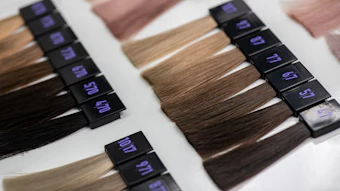
Daphne Benderly, Ph.D. from Presperse Corp. shared strategies for formulating inclusive sun care products; Raihaanah Safee from the University of Toledo applied color theory to improve foundation aesthetics across diverse skin tones; and Hawasatu Dumbuya, Ph.D., from La Roche-Posay, L’Oreal USA, concluded the session with research advances in eczema and severe dry skin in diverse patients.
Postbiotics, Longevity Activator, Small RNA-based Active and Other Emerging Technologies
Meanwhile, the Emerging Technologies session showcased forward-thinking innovations in general. Alba Cico, Ph.D., from Sederma explored skin health and well-being through the gut-skin connection and postbiotic approaches.
 Silvia Benito, Ph.D., from Provital, explained how how single-cell transcriptomics reveal hidden details about cellular interactions and more accurately reflect the processes in human skin.
Silvia Benito, Ph.D., from Provital, showed how single-cell transcriptomics reveal hidden details about cellular interactions. According to Benito, single-cell sequencing shows the gene expression profile of individual cells, which vary from cell to cell. Analyzing the collective data for all cells reveals patterns that can be organized into groups. So, while broader gene arrays and RNA sequencing provide a high-level overview, they do not discern these cellular differences.
The company created a novel skin equivalent model containing melanocytes to replicate the epidermal architecture to show how single-cell transcriptomics more accurately reflect the processes in skin. "[This technique] allows you to see processes that are hidden in cells (intercellular communication)," said Benito. "The power of this technique is, once we identify the different cells, you can see the different expression levels."
Ratan Chaudhuri, Ph.D., of Sytheon Ltd., then introduced zinc dibutyroyllysinate (ZDL) as a modulator of longevity pathways. The ingredient rejuvenates aged human skin by restoring chromatin plasticity, extracellular matrix integrity and stem cell function.
In human skin cells and ex vivo aged skin, ZDL inhibited HDAC activity while preserving mTORC1 signaling, unlike rapamycin, which suppresses mTORC1. Ultimately, the ingredient reduced cellular senescence, reversing core hallmarks of skin aging including matrix loss and functional decline.
Paul Lawrence, Ph.D., from Biocogent, LLC, discussed advancements in small RNA-based actives. He explained two approaches to act on the body's epigenetics:
mimics, which are replicates of naturally occurring miRNAs in skin that bolster levels of specific miRNA to, in turn, suppress targeted downstream pathways; and
antagomiRs, small, single-stranded RNAs that intercept natural MiRNAs before they can diminish the expression of targeted downstream pathways.
Key to this work, according to Lawrence, is the fact that the actives are acting transiently within the body's own biology. "It's a new approach to skin care," he said. "[You're telling] your cells what you want them to do in the form of what I refer to as short RNA-based 'text messages.'" Using this approach, he demonstrated the in vitro, ex vivo and in vivo (12 week study, n = 60) success of antagomiRs in increase the expression of key ECM proteins and reduce the appearance of wrinkles.
Finally, Scott Fulbright, Ph.D., from The Living Ink Technologies, shared insights into the future of color cosmetics through biotechnology. His company uses biomass from algae in place of petroleum to create an algae black pigment to replace Carbon Black across various industries. For cosmetics, thus far they have partnered with The Unseen to produce mascara and eyeliner using the algae pigment. What's more, through sequestering, the company has a negative carbon footprint.
President's Awards Luncheon and Evening Networking Reception
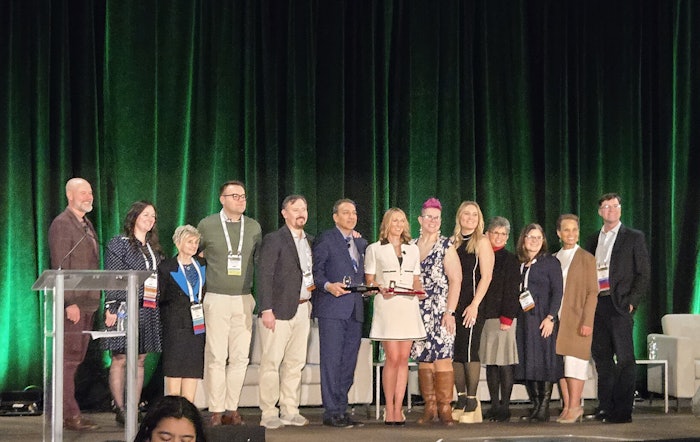
Midday, attendees gathered for the President's Awards Luncheon, which celebrated outstanding achievements in cosmetic science.
 Dolores Kenney received the Florence Wall Women in Cosmetic Chemistry Award
Prestigious honors such as the Maison G. deNavarre Medal Award, the Florence Wall Women in Cosmetic Chemistry Award, and the SCC Merit Award were presented, along with the Robert A. Kramer Lifetime Service Award, the SCC Education Award, the Green Star Award, and the Young Scientist Award. See the full list of honorees here.
This celebratory event highlighted the contributions of individuals and organizations driving innovation in the industry. It also recognized the board members for the incoming year.
The day concluded with a lively Cocktail Reception, providing attendees the opportunity to network and engage with exhibitors and one another.