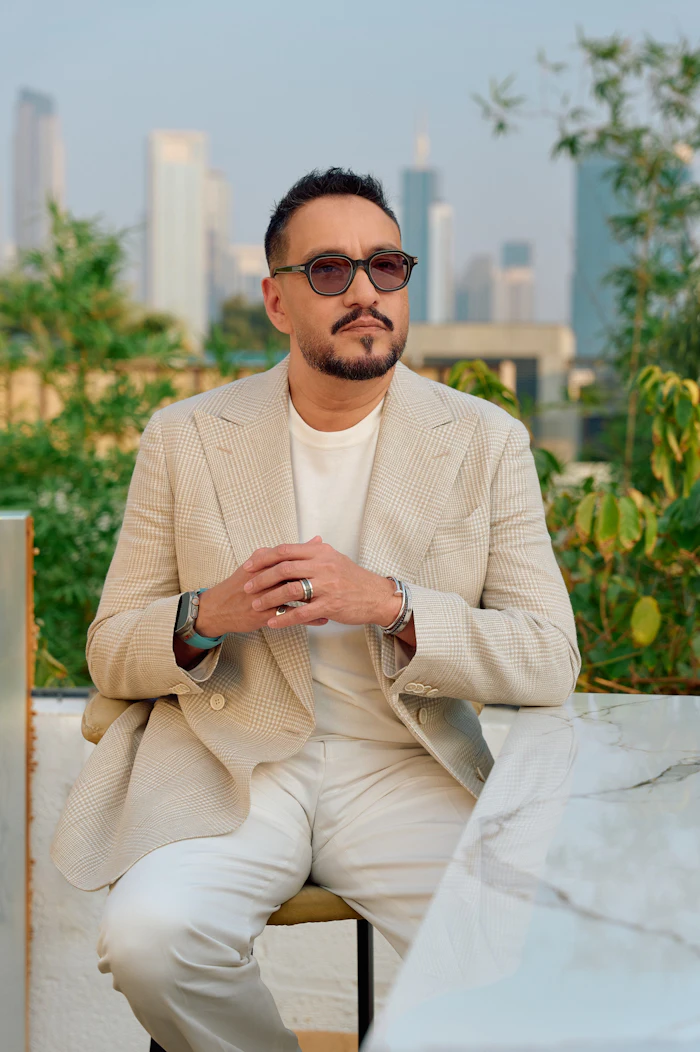
 "When we approached the U.S. market, we knew that many people are intrigued by oud but may not have experienced it in a meaningful way," says Abdulla Ajmal. "A digital-first launch through our U.S. website and Amazon allowed us to introduce collections like Oud Marquis to a wide audience, while explaining the material, its structure, and how we interpret it in a contemporary way."Ajmal Group
Marking a new chapter in its international journey, Ajmal is introducing the Oud Marquis Collection to the U.S. market. Conceived in Dubai and crafted in Paris, this 10-composition collection blends traditional Arabian perfumery with modern Western sensibilities, offering a refined fragrance wardrobe designed to reflect mood, moment, and personal identity.
With a digital-first launch through the brand’s U.S. website and Amazon, Ajmal is making its heritage accessible to a broad audience, while preparing for future flagship stores in New York, London and Shanghai to bring the artistry of Middle Eastern perfumery to life in immersive, educational spaces.
In this Q&A, Abdulla Ajmal discusses how the house translates its olfactory heritage for American consumers, balances tradition with modern innovation and positions Ajmal as a global symbol of luxury, culture, and the expressive power of scent.
P&F+: You’ve described Ajmal’s presence in the United States as a new chapter where classic craftsmanship meets modern sensibilities. How are you specifically tailoring the "lifestyle essential" aspect of Arabic perfumery to resonate with the mindful and expressive habits of the American consumer?
Abdulla Ajmal: In the Middle East, fragrance is not just worn—it’s lived with. A home may be scented with bakhoor in the evening; people often apply concentrated oils before stepping out; and it is common to layer scents throughout the day. These habits have shaped how we think about perfume at Ajmal Dubai. When we look at the U.S., we don’t try to export those rituals directly; instead, we translate the philosophy behind them. American consumers view fragrance as a form of self-expression, which creates an interesting bridge. What we bring is the depth of oriental perfumery—materials like oud, richer bases, and long-lasting structures—but interpreted in compositions that feel contemporary and versatile. For us, it’s about showing how fragrance can move from being an occasional accessory to something that becomes part of everyday presence, while still respecting the sensibilities of the market.
 Oud Marquis Rêve Mimosa: Playful and vibrant blackcurrant, lemon and strawberry capturing spring’s elegance; 3.4 oz EDP for $199.00, available on Amazon.Ajmal
P&F+: With the Oud Marquis collection launching on a new dedicated U.S. website and via Amazon, how does this digital-first approach help Ajmal navigate the challenge of introducing complex, oud-based scents to a market that historically values authenticity but may be less familiar with traditional Middle Eastern scent profiles?
Abdulla Ajmal: Oud is where our story began. My grandfather built the Ajmal journey trading and understanding oud long before it became a global trend, so for us at Ajmal Dubai it is not simply an ingredient—it is part of our DNA. Over the years, many consumers have come to call us the “King of Oud,” and while we accept that title with pride, we also carry it with a sense of responsibility. When we approached the U.S. market, we knew that many people are intrigued by oud but may not have experienced it in a meaningful way. A digital-first launch through our U.S. website and Amazon allowed us to introduce collections like Oud Marquis to a wide audience, while explaining the material, its structure, and how we interpret it in a contemporary way. At the same time, we believe oud must ultimately be experienced at its source. That is why we host our Oud Retreat in Hojai, Assam—where the origins of our journey lie—so perfumers can see the cultivation, touch the wood, and experience oud not just as a commercial ingredient, but in its most raw and authentic form.
P&F+: The Oud Marquis collection was conceived in Dubai but crafted in Paris. Can you elaborate on the creative synergy between these two perfume capitals and how this "East-meets-West" production model defines the "modern luxury" you are introducing to the U.S.?
Abdulla Ajmal: People often position Dubai and Paris as two very different worlds of perfumery, but in reality, they share the same respect for craftsmanship. Dubai represents the richness of oriental perfumery, where materials like oud have long been associated with presence and opulence, and where fragrance is traditionally layered through oils, bakhoor, and perfume. Western perfumery, particularly in Paris, brought another important dimension to fragrance—it made perfume easier and more fluid for a consumer who is constantly on the move, through beautifully composed sprays and modern interpretations of classic materials. With Ajmal Dubai, the Oud Marquis collection reflects that dialogue. The inspiration comes from our heritage in Dubai and our instinctive understanding of oud as a material, while the fragrances are composed in Paris where perfumers interpret that richness through elegant contemporary accords. In many ways, it’s not East meeting West as much as two traditions of excellence working together.
 Oud Marquis Fougère Oud: A crisp, spicy spring statement of pear, citrus, and ginger that transitions from office to evening; 3.4 oz EDP for $199.00, available on Amazon.Ajmal
P&F+: Ajmal is credited with transforming traditional Arabic perfumery into a modern lifestyle essential. Beyond the scent itself, what aesthetic or experiential shifts has the brand made to ensure its "Dubai-born olfactory heritage" feels contemporary for a global audience?
Abdulla Ajmal: Ajmal’s evolution into a modern Middle Eastern luxury house has been as much about how fragrance is experienced as how it is presented. Aesthetically, the brand has moved toward a more contemporary visual language. Bottle silhouettes today are more architectural and refined, with cleaner lines and modern typography that sit comfortably within the global luxury space, while still retaining subtle cues of oriental heritage. The intention has been to create designs that feel relevant to a younger, international audience without losing the cultural depth that defines Middle Eastern perfumery.
Equally important has been the shift in how the consumer encounters the fragrance itself. Traditionally, appreciating a fine oriental perfume often required a certain level of familiarity or connoisseurship. Ajmal has consciously worked to make that experience more intuitive and accessible. Through storytelling and communication, the brand goes beyond simply describing ingredients. Each fragrance is introduced through its personality, muse, and emotional landscape, helping the wearer imagine who the scent belongs to and how it might live in their life.
This approach also reflects a more contemporary philosophy of perfumery. Rather than prescribing strict rules, Ajmal encourages consumers to explore fragrance more freely—choosing scents based on mood, moment, and personal resonance. Conversations around occasion, personality, and feeling make the discovery process more personal and less intimidating. In many ways, this represents a broader shift in how Middle Eastern perfumery is presented globally: rooted in heritage, but communicated through a more open, experiential and future-forward lens. Ajmal’s “Dubai-born olfactory heritage” therefore becomes not just a reference to tradition, but a way of expressing oriental perfumery with clarity, confidence, and modern cultural relevance.
P&F+: While the current U.S. expansion is heavily focused on e-commerce and select distribution partners, the company has expressed plans for flagship stores in the coming year. What role will these physical locations play in educating new fragrance enthusiasts about the "art of Arabian perfumery"?
Abdulla Ajmal: Physical stores will play a very important role in bringing the sensory depth of Arabian perfumery to life—something that cannot be fully experienced through a screen.
For many consumers in the U.S., oriental perfumery is still relatively new. A flagship store therefore, becomes more than a retail space; it functions as a place of discovery and education. Visitors can explore the richness of the fragrance families that define Arabian perfumery—oud, amber, florals, and spices—while understanding how these elements are layered to create depth and longevity.
These spaces will also allow Ajmal to introduce people to the rituals and traditions that are part of the culture of scent in the Middle East. From experiencing perfume oils alongside sprays to learning how fragrance can be layered, the goal is to make the encounter immersive rather than transactional.
At the same time, the stores will be designed with the sensibilities of a modern global audience in mind—clean architecture, curated fragrance displays, and guided discovery that allows both enthusiasts and newcomers to navigate the collection easily. In essence, the flagship stores will serve as bridges between cultures: places where new fragrance lovers can experience the artistry of Arabian perfumery firsthand while understanding how it fits naturally into contemporary lifestyles.
 Oud Marquis Fève Tonka: Bright, uplifting bergamot and Granny Smith apple with refined masculine energy; 3.4 oz EDP for $199.00, available on Amazon.Ajmal
P&F+: As you expand into diverse international markets, what is your strategy for staying true to Ajmal’s roots as an expert in oud-based fragrances while ensuring your marketing messages remain relevant to different cultural perceptions of luxury?
Abdulla Ajmal: Maintaining authenticity while expanding globally begins with a very clear understanding of who we are. At Ajmal, our foundation has always been our expertise in oud and oriental perfumery. That knowledge comes from decades of working closely with natural ingredients, particularly oud, which remains central to our identity. No matter which market we enter, that heritage remains intact—it is the reference point from which everything evolves.
However, authenticity does not mean being rigid. Different markets interpret luxury differently, and fragrance preferences are deeply cultural. Our strategy is therefore to preserve the craft and knowledge of oriental perfumery while adapting how we present it. In the Middle East, for example, consumers are very familiar with rich oud compositions, whereas in Europe or the U.S., the same ingredient may be interpreted through lighter, more contemporary structures.
What remains constant is the storytelling behind the fragrance—the inspiration, the emotion, and the craftsmanship that goes into creating it. Instead of focusing purely on ingredients, we communicate the personality of the scent, the occasions it suits, and the experience it creates for the wearer. This allows people from different cultures to connect with the fragrance in their own way.
In that sense, our approach is not about changing who we are, but about translating our heritage. Oud remains the soul of Ajmal, but the way that soul expresses itself can evolve depending on where in the world the fragrance is discovered.
P&F+: As a CEO representing a multi-generational heritage, how do you balance the pressure of "olfactory innovation" with the responsibility of preserving a tradition founded in Dubai in 1976?
Abdulla Ajmal: Ajmal’s journey actually began in 1951, when my grandfather founded the company with a deep passion for agarwood and the craft of traditional perfumery. What started as a small family venture rooted in oud and natural ingredients gradually evolved into a global fragrance house. Dubai later became the city from which we expanded internationally, and its spirit of ambition, openness, and innovation has played an important role in shaping the modern identity of Ajmal.
For me, leading a multi-generational brand comes with both privilege and responsibility. On one hand, there is a legacy of knowledge that has been built over decades—our understanding of oud, our relationships with ingredients, and the traditional techniques that define oriental perfumery. Preserving that heritage is essential because it is the foundation of everything we do. At the same time, the fragrance world today is very different from what it was even twenty years ago. Consumers are more curious, more global in their tastes, and far more open to exploring new scent profiles and formats.
The way we balance this is by ensuring that innovation grows from our heritage rather than replacing it. Our expertise in oud and oriental compositions remains central, but we interpret it through contemporary perfumery—working with international perfumers, experimenting with new accords, and presenting fragrances in ways that feel modern and accessible to today’s audience. We also focus on storytelling, helping consumers understand the personality of a fragrance, the emotion behind it, and the moment it is meant to accompany in their lives.
Innovation, for us, is not about abandoning tradition; it is about allowing tradition to evolve. When you respect the craftsmanship and knowledge that built the brand, innovation becomes a natural extension of that legacy. That philosophy allows Ajmal to remain deeply rooted in its heritage while continuing to grow as a modern global fragrance house.