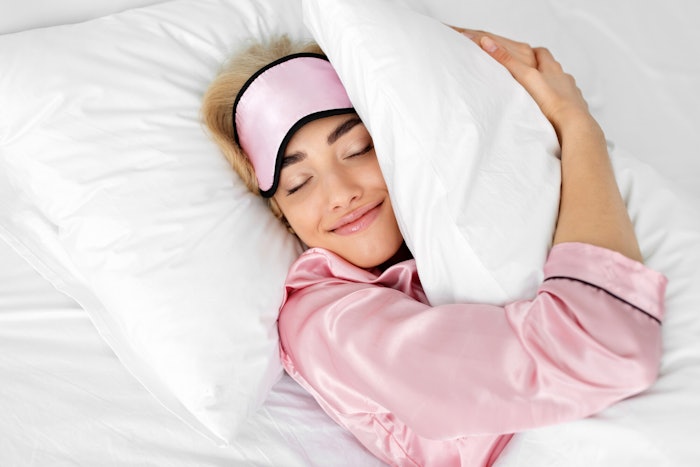
Beauty is not just skin deep — it’s influenced by how well a person sleeps and feels. From clearer skin to a brighter mood, science now proves that restful nights and emotional balance impact the perception and meaning of beauty. This understanding has given rise to a holistic approach to beauty, where skin care routines are not just about topical treatments, but are integrated with lifestyle practices that support overall well-being.
Here, we consider the intricate relationship between beauty, sleep and wellness, exploring the scientific principles, market trends and product innovations that are defining this evolving landscape. We also consider how the lack of sleep and stress manifest on the skin and how the industry is responding with examples of advanced solutions that address these issues at their core.
This article is only available to registered users.
Log In to View the Full Article
Beauty is not just skin deep — it’s influenced by how well a person sleeps and feels. From clearer skin to a brighter mood, science now proves that restful nights and emotional balance impact the perception and meaning of beauty. This understanding has given rise to a holistic approach to beauty, where skin care routines are not just about topical treatments, but are integrated with lifestyle practices that support overall well-being.
Here, we consider the intricate relationship between beauty, sleep and wellness, exploring the scientific principles, market trends and product innovations that are defining this evolving landscape. We also consider how the lack of sleep and stress manifest on the skin and how the industry is responding with examples of advanced solutions that address these issues at their core.
Helping us to unravel these mind, body, sleep and wellness connections are Rishabh Kala, Ph.D., director, advanced technology, skin biology; and Chloe Green-Vamos, vice president, global R&D and innovation strategy, both of The Estée Lauder Cos. (ELC).
The Science of Beauty Sleep
We’ve known for decades that sleep is a critical period for the body's natural repair mechanisms, particularly for the skin. During deep sleep, the body releases growth hormones that help repair damaged cells, including those in the skin. This is also when the skin's cell regeneration and collagen production are at their peak.1, 2
“As the original architect of the Night Repair category, the Estée Lauder brand continues to define the frontier of sleep-inspired skin care,” writes Kala. “With over four decades of category leadership, we pioneered the space with the launch of Advanced Night Repair, and we continue to lead through groundbreaking innovations in circadian rhythm science, chrono-active ingredient delivery and nighttime skin repair and recovery.”
According to Kala, the company’s basic science research has uncovered critical insights into the biological functions of skin at night; functions that are essential to maintaining a youthful, healthy appearance. “..[K]ey regenerative processes — such as cell proliferation, collagen and elastin synthesis, and autophagy (cellular detoxification) — peak during this time,” he explains.
Conversely, a lack of sleep can have significant negative effects. Studies have shown that sleep deprivation is linked to increased signs of aging, such as fine lines, reduced elasticity and uneven skin tone. One important factor is the stress hormone cortisol, which is typically lowest at night.1 When cortisol remains elevated due to inadequate sleep or stress, it triggers inflammation and accelerates the breakdown of collagen and hyaluronic acid — the molecules that give skin its plump, youthful appearance.3, 4
“When … circadian-regulated repair processes are disrupted, whether by aging, lack of sleep or environmental exposures, the skin becomes less resilient to the daily challenges it faces, including UV damage and pollution,” Kala emphasizes. “This misalignment contributes directly to visible signs of aging and dullness. At Estée Lauder, we are committed to promoting this rhythm and unlocking the full potential of nighttime renewal. …”
Recent research in the cosmetics industry also highlights the importance of the mind-skin-endocrine loop, which incorporates the skin, the brain and the body’s hormonal system. When psychological stress is high, the resulting cortisol spike doesn't just impact mood, it manifests through the skin, affecting comfort and appearance. Innovations like the neurocosmetic AnnonaSense CLR (INCI: Annona Cherimola Fruit Extract) have demonstrated the ability to reduce systemic cortisol levels. In vivo studies found that the ingredient not only reduced psychological stress and improved sleep quality, but also enhanced the health and comfort of the skin, completing the feedback loop between mind, skin and hormones.5
Furthermore, the body’s circadian rhythm governs the skin's repair cycles.6 Disruption to this rhythm, which may be caused by exposure to blue light from digital devices, can impair these natural processes.
Crafting Products to Harness Night Repair Mechanisms
In response to the growing awareness of sleep's role in beauty, cosmetic companies are developing sophisticated products designed to work in harmony with the skin's nocturnal cycle. “It’s not about changing how someone sleeps — it’s about harnessing the transformative power of the night,” Kala notes. “We [at ELC] are not targeting sleep behavior, we’re reinforcing/promoting what the skin is already biologically programmed to do during sleep: repair, renew and restore.”
He adds that by leveraging expertise in how the lack of sleep impacts skin’s repair rhythm, the company can reinforce skin’s self-renewal despite disruptions caused by lack of sleep — or aging, stress and environmental exposure. “…It’s not about influencing sleep — it’s about acknowledging what [the] lack of it does to skin and unlocking the biological potential of the natural skin repair that happens at night.”
According to Kala, sleep sits at the intersection of science, wellness, longevity and luxury, and ELC has codified this category to understand the consumer mindset and key drivers behind a compelling night care experience. Green-Vamos explains: “…On the consumer side, our enterprise marketing team leverages AI trend sensing and social listening to decode how different audiences talk about and approach sleep — from stress recovery to digital burnout to luxury self-care — and use that data to shape innovation strategy across categories.”
Kala highlights: “…[W]e are shaping the future of beauty sleep with … biotechnology, circadian biology, neuroscience and longevity science — all in service of delivering high-performance, multi-sensory solutions that restore not just facial skin, but also body and mind.”
Designing Beauty Sleep-Enhancing Ingredients
Ingredient suppliers are also on the pulse of this movement, designing products to mitigate the effects of sleep deprivation and digital stress while actively improving skin health overnight.
- Sederma’s Synchrolife (INCI: Glycerin (and) Pentylene Glycol (and) Rosmarinus Officinalis (Rosemary) Leaf Extract (and) Palmitoyl Tetrapeptide-7 (and) Chrysin) is a peptide-based active designed to counteract the effects of digital pollution and realign the skin's circadian rhythm. Clinical studies showed that it helped users feel less tired and notice smoother skin after just one week.7
- Croda Beauty’s Zenakine (INCI: Lactobacillus Ferment Lysate (and) Glycerin (and) Pentylene Glycol (and) Propanediol (and) Xanthan Gum) is a biotech-based active that bridges the gap between skin and well-being. It supports skin resilience against emotional and physical stress, with clinical studies demonstrating an 11.3% improvement in sleep quality and a 13.5% increase in feelings of happiness.8
- Microphyt’s Zenitium (INCI: Caprylic/Capric Triglyceride (and) Porphyridium Cruentum Extract (and) Tocopherol) is an active ingredient from microalgae designed to relax facial muscles, which is a key step in initiating sleep. It contains GABA, which acts as a neurotransmitter to reduce neuronal hyperactivity, and other bioactive compounds that reduce muscle contractions, soften expression lines and improve skin roughness over time.9
- Ashland’s Nightessence (INCI: Butylene Glycol (and) Water (Aqua) (and) Lavandula Angustifolia (Lavender) Flower Extract) is a natural lavender extract designed to optimize the skin’s overnight repair processes. It boosts essential nighttime molecules like melatonin and timezyme to help skin look more rested and renewed by morning, proving effective even for those with disrupted sleep schedules, such as night-shift workers.10
- Givaudan’s Synchronight (INCI: Betaine (and) Gardenia Jasminoides Fruit Extract (and) Glycerin (and) Maltodextrin (and) Water (Aqua)) is derived from gardenia fruits and is formulated to protect the skin’s natural melatonin production from the disruptive effects of blue light. It was shown to reduce wrinkles by 26% after 56 days and drastically reduce nighttime awakenings, improving overall sleep quality.11
Employing the Mind-Beauty-Wellness Connection
In relation to beauty and sleep, the concept of psychodermatology has moved from a niche field to a central driver of beauty innovation. Mintel’s 2024 Beauty Trend Report identified mind-body beauty as the next major shift, paving the way for neurocosmetics — products formulated with ingredients that can influence mood and emotional state.
Extensive research now shows a truly bidirectional relationship between the brain, the skin, and our daily emotional experiences.12 Routine beauty practices, such as applying makeup or using skin care, are no longer seen as merely cosmetic; they have quantifiable effects on mood and physiological markers of stress.
For instance, a 2024 randomized trial found that applying makeup not only improved participants’ feelings of well-being, but also led to a measurable decrease in salivary cortisol, a key stress hormone, within hours.13 These findings underscore how beauty rituals can support stress relief and elevate mood, making them bona fide wellness interventions.
This integration is mirrored in the shift of beauty routines toward measurable wellness outcomes. As previously described, beauty and wellness are inseparable and reinforce one another both biologically and psychologically.14 Practices once labeled as aesthetic are now recognized as interventions that can influence neuroendocrine, immune and psychological health. Beauty routines, self-care rituals, and even simple topical applications can create positive feedback loops, where improved appearance boosts mental wellness, and a balanced mental state benefits skin health.
Research supports this convergence in other ways, too. For example, a Unilever study15 found that higher levels of certain skin bacteria were linked to lower stress and improved mood. Meanwhile, the emotional distress of conditions such as acne can be eased by products that support skin health and, by extension, emotional well-being. Chronic psychological stress has also been shown to disrupt skin homeostasis via the HPA axis and inflammatory pathways, which can worsen visible conditions and create a cycle of emotional and biological burden.14
Ingredient innovations in the emotive beauty space are thriving, especially as research uncovers new mind and beauty connections.
- Phytessence Green Coffee EC (INCI: Glycerin (and) Water (Aqua) (and) Coffea Robusta Seed Extract), from Croda Beauty, has been shown to enhance the release of β-endorphins, fostering feelings of joy and positivity while also toning the skin and reducing signs of fatigue.
- YouSIA, by TS-Biotech, is a holistic acne solution that not only targets the physical causes of acne but also boosts positive neurotransmitters like oxytocin and serotonin, helping to alleviate the emotional stress associated with the condition.
- GlowCytocin (INCI: Glycerin (and) Water (Aqua) (and) Hyacinthus Orientalis (Hyacinth) Extract), from Lucas Meyer Cosmetics by Clariant, has been shown to improve parameters of emotional well-being, representing a new frontier in formulating for "feelings."16
The future of skin care is thus rooted in emotional and psychological wellness, with beauty rituals recognized as powerful tools for both visible results and lasting well-being.
Botanicals and Biotech for Beauty, Stress and Sleep
The demand for holistic and effective — in addition to sustainable — products has fueled innovation in advanced botanical and biotechnological ingredients. These actives often provide multifunctional benefits that address beauty, stress and sleep simultaneously.
- ImDerma Laboratories’ ArMorpheus (INCI: Ferula Galbaniflua (Galbanum) Resin Oil (and) Copaifera Officinalis (Balsam Copaiba) Resin (and) Hedychium Coronarium Root Extract (and) Citrus Aurantifolia (Lime) Peel Extract (and) Humulus Lupulus (Hops) Extract) is an essential oil blend designed to enhance sleep quality and relaxation by stimulating alpha brain waves, which are associated with a state of rest. It also possesses anti-inflammatory benefits.
- Active Concepts’ AC WonderShroom (INCI: Camellia Sinensis Leaf Extract (and) Cordyceps Sinensis Extract (and) Hericium Erinaceum Extract (and) Aureobasidium Pullulans Ferment) combines adaptogenic mushrooms and green tea to counteract stress-induced aging. It reportedly leverages principles of psychoneuroimmunology to reinforce the skin barrier, improve elasticity and even enhance cognitive focus by boosting beta brainwaves.
- Inabata France’s Inawave BiotecHemp (INCI: Water (Aqua) (and) Pentylene Glycol (and) Cannabis Sativa Root Extract) is a cannabisin-rich extract produced through eco-friendly biotechnology that is said to target biological pathways linked to longevity and well-being. It boosts serotonin production for mood regulation while demonstrating antioxidant and antimicrobial properties.
- Expanscience’s Tulsinity Bio, derived from organic holy basil, is a nutraceutical active that bridges internal and external wellness. Developed with a green extraction process, it is standardized for key adaptogenic and antioxidant molecules. According to the company, Tulsinity Bio is designed to preserve skin elasticity and radiance even under stress, while supporting mental resilience and balance. Key benefits include protecting collagen and elastin fibers, maintaining skin hydration and barrier function, restoring hyaluronic acid levels, reducing both peripheral and skin cortisol secretion, and improving overall quality of life and resistance to stress.
Beauty/Wellness Market Trends and Consumer Insights
The convergence of beauty and wellness is not just a trend; it's a massive market opportunity grounded in shifting consumer priorities and measurable results. The global beauty and wellness products market reached approximately $1.73 trillion in 2024 and is projected to grow at a compound annual growth rate (CAGR) of 8.59% through 2032. In addition, according to McKinsey, wellness is a top or important priority for 84% of U.S. consumers, 79% in the UK, and 94% in China.17
This evolving landscape is characterized by a surge in consumer interest in holistic self-care. For example, a 2024 report found that 82% of Americans and 87% of Chinese consumers now prioritize wellness daily,14 often integrating routines that span appearance, nutrition and mindfulness practices. This is reflected in rising demand for appearance-enhancing nutricosmetics such as collagen peptides, biotin, herbal adaptogens and probiotics that have become mainstream and popularized in both Asian and Western markets. Functional foods that benefit both beauty and health, like beauty teas, superfood blends and even collagen-infused beverages, blur the line between aesthetics and nutrition.
This wellness-beauty crossover extends to topical cosmeceuticals and devices, including serums with adaptogens, CBD or hemp extracts for anti-inflammatory benefits, aromatherapeutic oils and at-home LED devices that target both mood and skin repair. Clinics now offer services like IV vitamin infusions for "skin glow," and apps track lifestyle factors ranging from diet to stress levels that affect appearance.
Altogether, today's consumers are actively looking beyond temporary fixes for solutions that deliver holistic support — addressing sleep quality, stress relief, immune balance and mood as fundamental parts of a comprehensive beauty routine. For product developers and marketers, the clear directive is to create scientifically validated, multifunctional products and experiences that bridge internal wellness and external beauty, helping consumers feel as good as they look.
Conclusion
The beauty industry is undergoing a paradigm shift, moving beyond surface-level aesthetics to embrace a deeper, more integrated vision of wellness. The undeniable link between sleep, mental state and skin health has created a new standard for product innovation. Consumers are no longer just buying products; they are investing in solutions that help them look and feel their best from the inside out, preserving health and youth.
“Beauty and wellness is not only about products; it’s also deeply connected to the consumer’s day-to-day lived experience and lifestyle,” remarks Green-Vamos. “We see a great convergence in categories as consumers are seeking one thing: solutions.“
She adds that consumers desire more specialization, solutions fitted for a purpose, and enhanced utility tailored to specific use occasions and experiences. “The consumer is also more educated and curious than ever, with more data than she knows what to do with — seeking to understand her biology, sleep patterns and how they impact her health and beauty,” Green-Vamos emphasizes.
“Technology plays a big role in this with biometric data quite literally at your fingertips or on your finger,” she continues. “At ELC, we’re looking at sleep and night as a category in and of itself, informed by insights from adjacent industries and changing consumer behavior. Our innovation roadmap is committed first and foremost to the consumer, her pain points, her needs and her changing lifestyle — functional and emotional. …”
As science continues to uncover the complex mechanisms of the sleep-body-wellness connection, the most successful brands will be those that deliver effective, evidence-based products that cater to the whole person, creating a ritual of holistic self-care for beauty outcomes.
References
1.Adam, K., Oswald, I. (1984, Nov 24). Sleep helps healing. Br Med J (Clin Res Ed). Available at https://pmc.ncbi.nlm.nih.gov/articles/PMC1443671/
2.Sadur, A., Joerg, L., ... Choudhary, S., et al. (2025, Jul 30). The Sleep–skin axis: Clinical insights and therapeutic approaches for inflammatory dermatologic conditions. Dermato. Available at https://www.mdpi.com/2673-6179/5/3/13
3. Saarni, H., Tammi, M. and Doherty, N.S. (1978, Sep). Decreased hyaluronic acid synthesis, a sensitive indicator of cortisol action on fibroblast. Journal of Pharmacy and Pharmacology. Available at https://academic.oup.com/jpp/article-abstract/30/1/200/6197075
4.Oikarinen, A.I. and Uitto, J. (1986). Molecular mechanisms of glucocorticoid action on connective tissue metabolism. In: Connective Tissue Disease, Taylor and Francis, CRC Press.
5. Grabenhofer, R., Van der Hoeven, H. (2024, May 9). [Podcast] Reducing cortisol to close the mind-skin-endocrine loop for skin benefits. Cosm & Toil. Available at https://www.cosmeticsandtoiletries.com/multimedia/audio/podcast/22893936
6. Dong, K., Goyarts, E.C., Pelle, E., Trivero, J. and Pernodet, N. (2019, Aug 16). Blue light disrupts the circadian rhythm and creates damage in skin cells. Intl J Cos Sci. Available at https://onlinelibrary.wiley.com/doi/abs/10.1111/ics.12572
7. Behrens, M. (2020, Feb 18). Sederma resynchronizes sleep with Synchrolife. Cosm & Toil. Available at https://www.cosmeticsandtoiletries.com/formulas-products/anti-aging-face/news/21843153
8. Croda Beauty Actives. (2025, Apr 8). Croda Beauty launches Zenakine, taking sleep x emotion x skin health connection to a new level. Cosm & Toil. Available at https://www.cosmeticsandtoiletries.com/cosmetic-ingredients/actives/news/22937445
9. Microphyt. (2025, May 2). Microphyt debuts Zenitium active to relax mind, improve sleep and delay facial wrinkles. Cosm & Toil. Available at https://www.cosmeticsandtoiletries.com/cosmetic-ingredients/actives/news/22940157
10. Behrens, M. (2020, Apr 1). Improving beauty sleep with Ashland's Nightessence. Cosm & Toil. Available at https://www.cosmeticsandtoiletries.com/cosmetic-ingredients/natural-sustainable/news/21843246
11. Behrens, M. (2020, Mar 16). A good night's sleep for skin with Synchronight. Cosm & Toil. Available at https://www.cosmeticsandtoiletries.com/cosmetic-ingredients/natural-sustainable/news/21843202
12. Steinhoff, M., Dréno, B., Rey, A.B and Akimichi, M. (2025, Sep 16). The skin-brain dialogue: Advancing psychodermatology through integrated approaches. JEADV Clin Pract. Available at https://onlinelibrary.wiley.com/doi/full/10.1002/jvc2.70100
13. Grabenhofer, R., and Gunt, H. (2025, Jul 15). Wellbeauty and the mind-skin connection: A new era of care. Cosm & Toil. Available at https://www.cosmeticsandtoiletries.com/research/consumers-market/article/22944226
14. Ibid Ref 13
15. Cosm & Toil. (2025, Jun 23). Unilever links skin microbiome to mental well-being in landmark study. Available at https://www.cosmeticsandtoiletries.com/formulas-products/skin-care/news/22944047
16. Cosm & Toil. (2025, Mar 19). Lucas Meyer Cosmetics by Clariant sparks skin's 'love glow' with GlowCytocin. Available at https://www.cosmeticsandtoiletries.com/cosmetic-ingredients/actives/news/22936458
17. Cosm & Toil. (2025, Aug 25). How cosmetics impact mental well-being: The neurocosmetic frontier — Plus free webcast. Available at https://www.cosmeticsandtoiletries.com/cosmetic-ingredients/actives/news/22948663